B2B buying that fits how your customers actually order
Your customers buy through account structures, negotiated quotes, spending approvals, and standing reorders. Vendure builds those buying motions into one commerce platform, so the way they order is the way your storefront works.
The way your customers buy has more steps than a checkout
A rigid suite hands you one fixed model. An off-the-shelf store hands you a checkout and a company-name field. Either way, your team ends up running the real buying process on spreadsheets and inboxes, and every workaround is a place where orders slow down or slip.
The motion your customers actually run is longer: the right people order inside an account structure, negotiate on a quote, clear an internal sign-off, then reorder next month without starting over. Vendure models that whole motion on one platform and one order pipeline.
Every buyer in the right place, with the right permissions
Model the customer's organisation the way it really is: companies, business units, and users with company-scoped roles. Decide who can place orders, who has to approve, and who just watches. Addresses sit at the company or business-unit level, and each company gets the payment methods its contract allows, for example a Net 30 invoice for a key account.
Adding a customer company is a record in the Dashboard, not an integration project. The same account structure feeds approvals, quotes, and reorders downstream.
Quote-to-order that stays in one place
A buyer asks for a quote, your team responds, and the accepted quote becomes an order at the agreed prices. On Enterprise, your sales team revises the quote across versions, with internal notes the customer never sees. The buyer can request changes, and sales issues the next version.
No re-keying at checkout, no quote history stranded in a sales inbox, and every version and comment stays on the record.
Spending controls your customers' finance teams trust
Approvals match how the business actually signs off. From Scale, an order over a spending limit or order total waits for a named or role-based approver. On Enterprise, approvals can run through chains with more than one level, and a timeout can approve or reject a request automatically, so nothing stalls in an inbox for a week.
Your customer's procurement gate runs on these controls, and on Enterprise so does your team's internal sign-off on quotes before they are sent. Every decision is recorded with who decided and when.
The repeat business, without the friction
Most B2B revenue is repeat orders. Buyers reorder a past order in one click, paste a SKU list to skip browsing, or pull from a saved list of monthly kits. Every cart re-prices against the customer's current contract and group pricing and live stock, so repeat revenue stays on the platform instead of leaking into phone orders.
Each customer company carries its own buyers, business units, and shared addresses. Company-scoped roles decide who places orders, who only requests, and who approves. Adding a customer company is a record in the Dashboard, not an integration project.
Buyers request quotes from the storefront, and an accepted quote converts to an order at the agreed prices. On Enterprise, your team revises prices across versions on the same thread, and large quotes route through an internal sign-off before they are sent. The whole quote-to-order motion runs in one place, not a spreadsheet.
Replenishment buyers paste a SKU sheet or reorder a past order in one click, and saved lists hold the recurring kits the buying team pulls every month. Contract, group, and quantity-based prices all apply automatically, so the repeat business stays in the platform.









Teams building complex commerce with Vendure
Built on Vendure Core with custom plugins by eCube.
What B2B teams ask before they commit
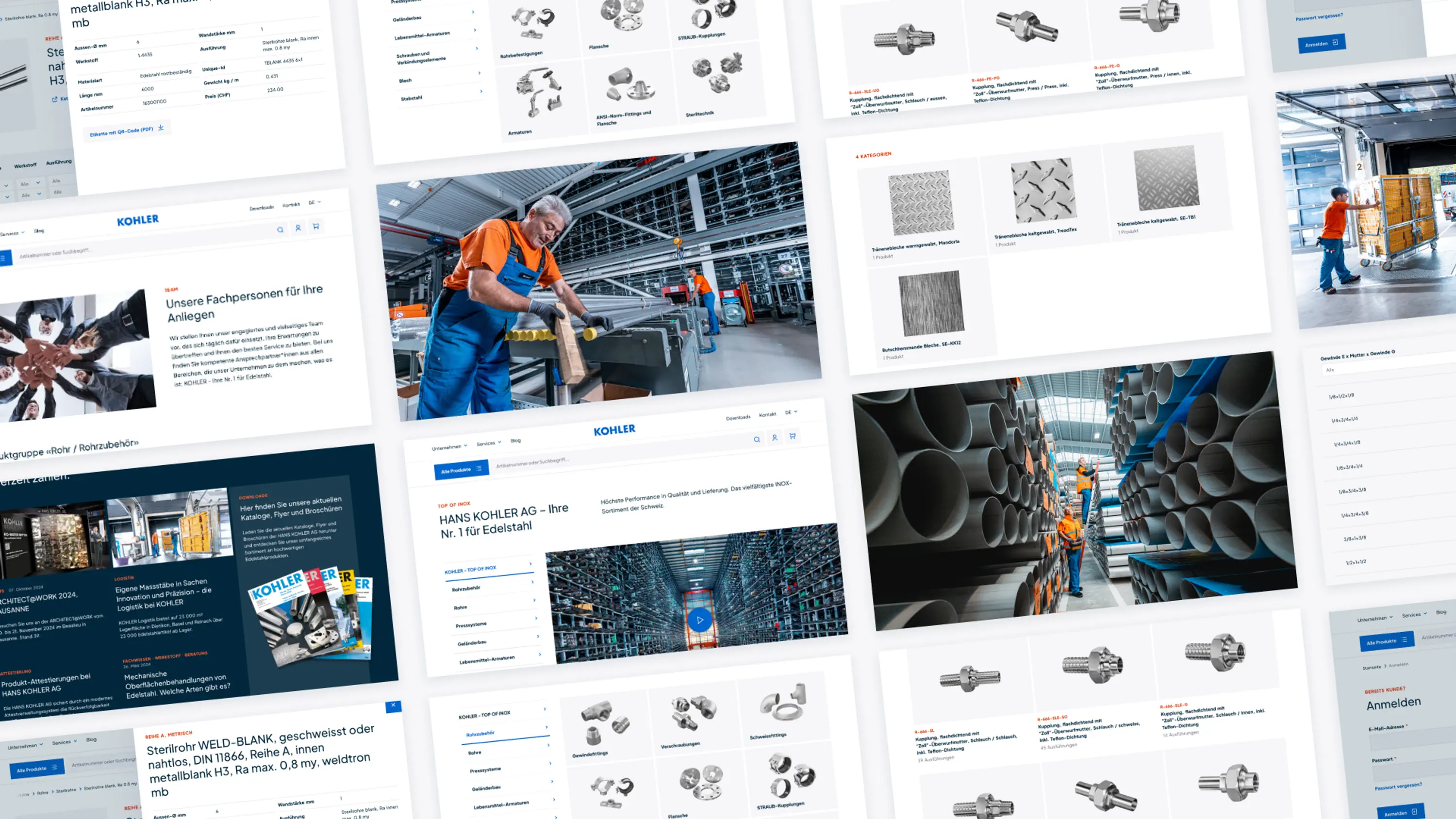
Yes. One Vendure instance can serve a B2C storefront and a B2B buying portal on the same catalogue and order pipeline, with different pricing, permissions, and checkout rules for each. Hans Kohler AG runs both on one Vendure-based platform that its agency built with custom code, and saw daily orders rise 15 to 20%.
No. Most teams start with the account structure, since it is the foundation the rest attaches to, then add quotes, approvals, and reorder as the business needs them. The motions share one data model, so they fit together when you turn them on, but you only run the ones your customers actually use.
Yes. A buyer can belong to several customer companies with separate roles and permissions in each, and switch between them without a separate login. That covers agents, group buyers, and shared-service teams that purchase on behalf of multiple organisations.
Business units are hierarchical and cover the common shapes: company to division to team, or company to region to branch. If your customers' organisations are deeper than the default, the limit is configurable, so the model stays matched to how they are structured.
Every approval decision and every quote version is a stored record with the actor and the timestamp. Your team can see where any deal stands, and the same history is the audit evidence finance and procurement ask for. See Operations and governance for the wider governance and audit surface.
Company accounts, quote requests, quick order and reorder are in every plan from Starter. Organization hierarchy and managed shopping lists arrive with Growth, order approvals and shared carts with Scale, and quote negotiation, the product configurator and PunchOut with Enterprise. Compare every plan.
How buying connects to the rest of your operation
The same account, quote, and approval data feeds the rest of the platform, because it lives in one place rather than being copied between systems. B2B buying is one part of what Vendure runs for you.
B2B pricing and catalogues
Contract and customer-specific pricing that quotes and reorders read automatically, so buyers always see their price.
ERP and integrations
Your team connects your ERP, CRM, and fulfilment through the APIs and plugins, so buying stays in step with the rest of your stack.
Brands and markets
Run multiple brands, business units, regions, and customer groups from one platform, with B2B and B2C side by side.
Operations and governance
The daily work of running orders, plus who did what, sign-on, and audit evidence built in for compliance.
See your buying scenarios on Vendure
Set up company accounts, quote requests, and repeat orders in a 14-day trial. Approvals start on Scale, so pick a Scale trial to test them, or compare the plans to see which one covers them.