The operational backbone lands back on you
You can build it yourself: a separate Temporal cluster, a custom job queue, an iPaaS for the integrations, and a thin webhook contract gluing it all to the commerce platform. Or you can accept the platform's limits and never automate the operations that actually move the business.
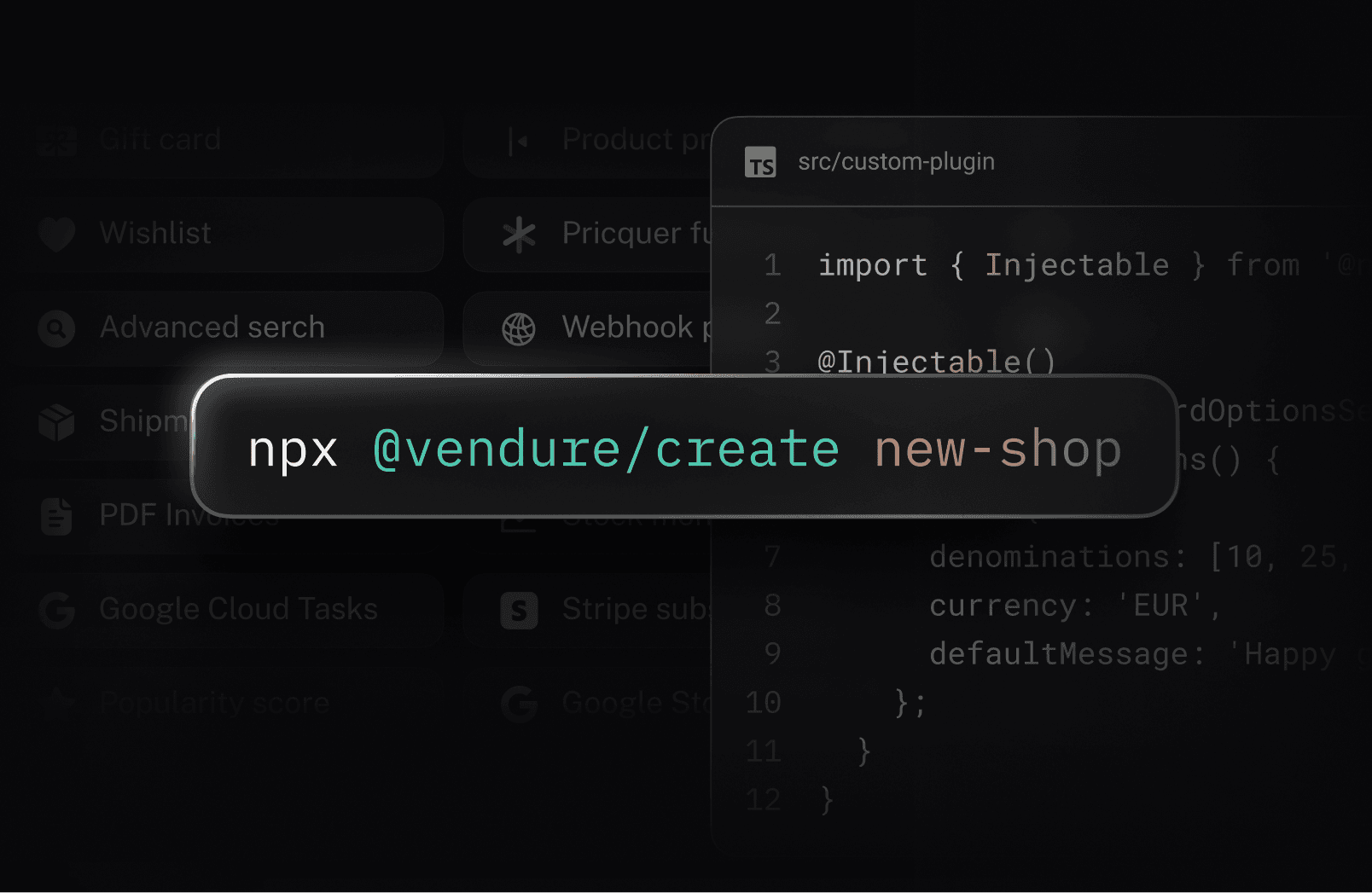
Vendure ships durable execution and a typed integration pattern inside the same application.
Workflows resolve Vendure services through the same dependency injection, operators observe and intervene in the dashboard they already use, and operational logic stays inside your codebase, versioned and testable, end to end.
The full operational stack, in one application
The operational backbone (job queue, worker, and events) ships out of the box. Durable workflows, a typed integration layer, and content versioning extend it without leaving the application. Everything runs on the same dependency graph.
The operational backbone
Admin API and dashboard, a DB-backed job queue and worker, scheduled tasks, and a typed EventBus — the operational backbone every plugin builds on.
Workflow engine, durable by default
Durable execution backed by Postgres. Every workflow step persists and recovers on restart. Typed signals let operators approve, escalate, or cancel from the dashboard.
Plugins, wired together
One import wires the plugins together — quote management, org hierarchy, approvals, and audit trails share permissions and context automatically. The integration concerns that would otherwise land on your team stay inside Vendure.
Content versioning
Snapshot version history for products, collections, and custom entities. Diff two versions, restore in one click, and stage edits in draft before they go live.
Operations resolve through the same dependency graph
Workflows live inside the Vendure application and resolve OrderService and your own plugin services through the same dependency injection the rest of your code uses. The workflow engine plugs into Vendure's job queue too: opt in, and every Vendure job runs on the same durable substrate. Crashed workers no longer lose work.
The integration package follows the same NestJS dependency model. It imports the plugins it bridges, fails fast if a required plugin is missing, and owns the shared concerns that don't belong to either plugin alone.
The shape of a real operational backbone
Three engineering scenarios that map onto code already shipping in Vendure.
Trusted by complex B2B commerce and enterprise retail.


Common questions from engineering leads
Operations is one capability. The platform ships more.
The operational backbone is one of several capability areas in Vendure. The same plugin model powers B2B workflows, pricing and promotions, search and discovery, and governance and compliance. See the full enterprise feature set.