Why We're Going All-In on Vendure
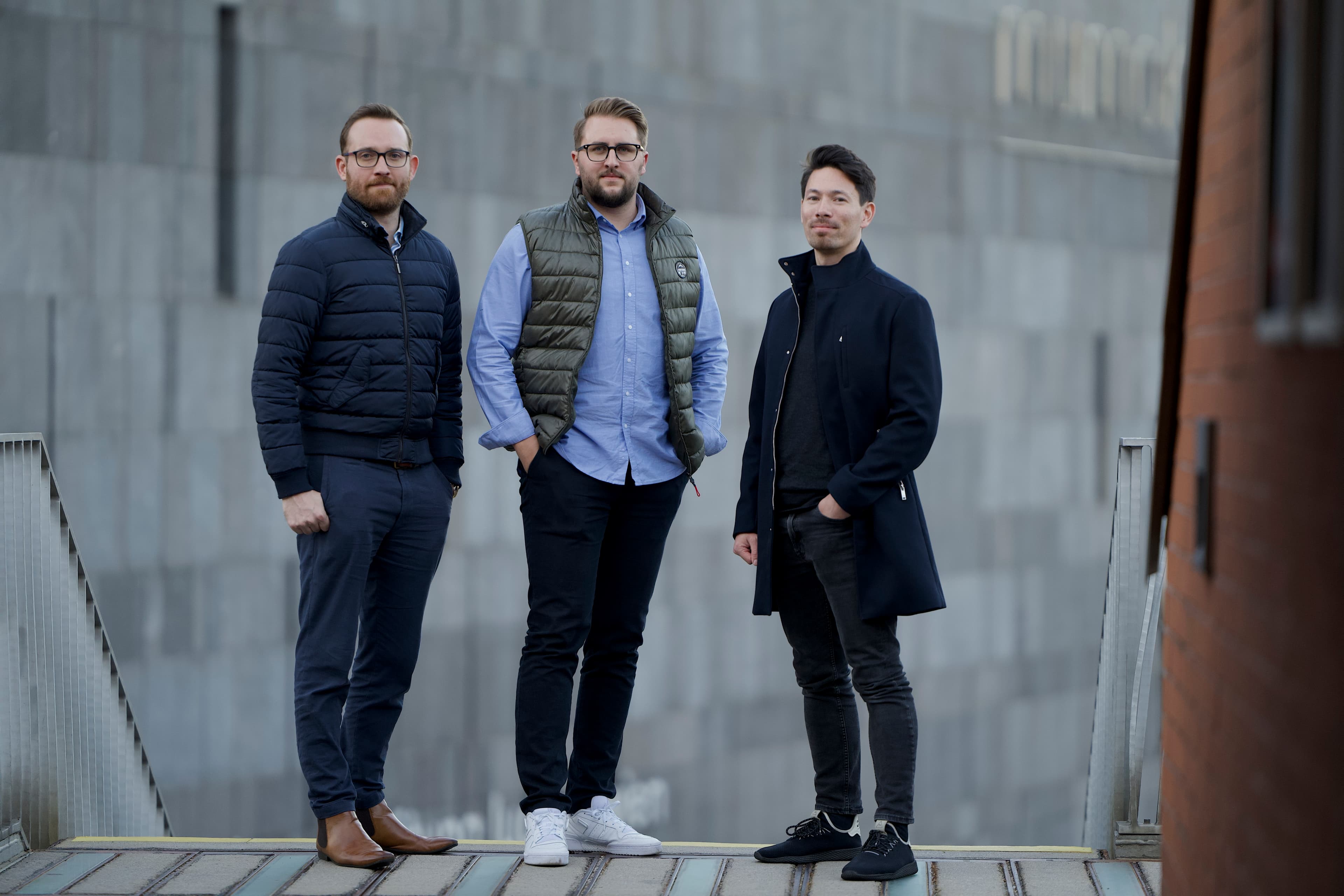
Today we're announcing that we're consolidating everything we've built into Vendure. We're shutting down Elevantiq — the agency that funded Vendure's development — to focus entirely on making Vendure the leading enterprise ecommerce platform.
This isn't a pivot born out of necessity. Elevantiq is profitable: nearly €3M in revenue, healthy margins, satisfied clients. For years, the agency took on enterprise-scale Vendure projects and fed those learnings back into the core framework.
We're stopping it anyway. Here's why.
How We Got Here
Michael built Vendure out of personal frustration. His parents run a business in the UK, and he was responsible for their ecommerce. The existing shop was a PHP system he'd cobbled together years ago. He wanted something modern: headless, TypeScript, designed for developers who actually care about code quality. He looked for it. It didn't exist. So on May 31, 2018, he made the first commit.
Meanwhile, David was running a digital agency in Austria called ALPIN11. What started as a generalist shop gradually specialized in complex B2B ecommerce: multi-tenant systems, custom pricing logic, the kind of projects that break off-the-shelf platforms.
By 2020, finding PHP developers who could also build solid frontends was getting harder every year. The industry was shifting toward full-stack JavaScript. In 2021, David's team went looking for a new foundation: open source, Node.js, headless, highly customizable. They found Vendure. The architecture was clean, opinionated in the right ways, and built for extensibility.
But David saw a risk: it was still primarily a one-person project. What if it went unmaintained? What if clients wanted to switch agencies? There was only one way forward: having skin in the game.
David reached out to Michael on LinkedIn. After several conversations between David, his colleague Max, and Michael, it was clear they shared a vision for what developer-focused ecommerce could become. In May 2022, they incorporated Vendure GmbH as a joint venture. David's agency took a stake. The logic was straightforward: if we're going to bet on this platform, we should own part of it.
Building Traction
At incorporation, Vendure had around 8,000 monthly npm downloads and about 3,300 GitHub stars. Respectable traction for an open-source project, but still early. A few notable companies had already adopted it, including IBM and Swile. These were teams that had done their due diligence and decided the technical architecture outweighed the business risk of a small core team.
Today, Vendure has over 40,000 monthly downloads and 7,800 GitHub stars: 5x growth in adoption since we joined forces. That growth happened without marketing spend, without a sales team, without VC money. Just a good product and word of mouth.
For the next eighteen months, Michael continued developing Vendure while David focused on growing the agency. The model was simple: ALPIN11 would take on complex Vendure projects, which would both generate revenue and stress-test the platform against real enterprise requirements. It worked. The agency grew. Vendure grew.
By late 2023, investors started reaching out. VCs had noticed the adoption curve and were interested in funding what looked like the next open-source commercial success.
We were skeptical at first. We'd seen what happens when VCs get involved with open-source companies: aggressive monetization that erodes community trust, pressure to show growth metrics that don't align with building great software. But we talked ourselves into exploring it.
In December 2023, we agreed on a set of non-negotiables and started the process.
From January to May 2024, David spoke with nearly 200 VCs while Max took over day-to-day agency operations, keeping clients happy and the team performing while we chased investor meetings.
The VC conversations were repetitive: the same questions about monetization, defensibility, market size. Gradually, the feedback started influencing our thinking. We found ourselves adjusting the pitch, then the strategy, then the vision itself.
In May 2024, we were in the Vienna office, whiteboarding yet another strategic adjustment based on VC feedback. Then we stopped.
"What are we actually doing here?"
We were violating every non-negotiable we'd set five months earlier. Worse, we were drifting away from what we actually wanted to build. Not just what we were building, but what we believed in. We'd let external validation become more important than our own conviction.
We stopped fundraising that week. Returned to building.
But a question remained: if not VC money, then what? How do we grow?
The Merger
By summer 2024, the answer was becoming clear. We couldn't keep spreading resources across two companies with different identities. Elevantiq (which we'd renamed from ALPIN11 to signal a new chapter) and Vendure needed to become one thing.
Michael traded most of his Vendure shares for equity in Elevantiq. He became CTO, overseeing not just Vendure development but all client projects. The idea was straightforward: Elevantiq would dedicate 15% of its resources to Vendure development and only take on projects that advanced the platform strategically. Non-Vendure work would fade out.
This model worked. The 2024 numbers were strong: client satisfaction was high, the team was performing well, and Vendure adoption continued to accelerate.
But something still felt incomplete.
The Decision
In September 2025, David had surgery and spent two months mostly at home, thinking. About the state of software development in the age of AI. About what we were actually building. About the potential that Vendure still hadn't realized.
The Elevantiq model was working, but it was incremental. We were optimizing a local maximum. To take the next step, one that was 10x the size of anything we'd done, we needed something more radical.
David worked through several strategic scenarios. Spoke with investors, mentors, and agencies building on Vendure.
By early December, he had options to present.
The three of us, Michael, Max, and David, gathered in Gmunden, a small town on Lake Traun in Austria, for a two-day offsite. Max brought the operational reality: what was working in client delivery, what the team needed, how a transition would actually function. Michael brought the product vision. David brought the strategic options.
The goal wasn't crisis management. Both companies were growing. The goal was to figure out how to fully unlock what Vendure could become.
After two days of discussions about personal ambitions, about what we wanted to build, about what we were willing to give up, we made the call:
We're going all-in on Vendure.
That means shutting down Elevantiq's agency business. No more done-for-you project work where we lead implementations end-to-end. No more competing with potential partners. Everything we've learned from years of building complex ecommerce systems goes into the platform and commercial products, not into billable hours.
What We're Building
Vendure will become the leading platform for enterprise ecommerce, with a focus on B2B models.
Two shifts make this the right moment. First, AI has changed what's possible. Complex projects that took six months can now be delivered in weeks. But AI without architecture creates unmaintainable code. Vendure provides a well-architected foundation of best practices and patterns that are maintainable for both AI agents and human developers. Our tech stack (NestJS, React) has massive representation in AI training data. When an AI agent works with Vendure, it builds on patterns it understands deeply.
Second, Europe needs to own its commerce infrastructure. Today, most European businesses run their commerce through US-controlled platforms. This creates real risks: strategic dependency on foreign vendors' pricing and product decisions, data sovereignty issues, no leverage. Open source changes this equation. With Vendure, businesses run commerce on infrastructure they actually control. The code is auditable. The data stays where you put it. We're building Vendure in Austria, with a European team, for a global market, but with particular attention to what European enterprises need: full control over their stack, data residency options, and the transparency that comes from open-source licensing.
These shifts create the opportunity. What we bring is the experience to execute on it. We've spent years building complex ecommerce systems: multi-tenant B2B platforms, custom pricing engines, integrations with legacy ERP systems. Every project taught us what enterprises actually need, not what a product team imagines, but what breaks at 2am.
We're packaging that into three offerings: Vendure Platform (built-in enterprise capabilities: content versioning, approval workflows, audit trail, security hardening, SSO, and more), Vendure Cloud (managed hosting for teams that want to focus on their business, not infrastructure), and Vendure Professional Services — done-with-you engagements that augment in-house and agency teams to deliver successful implementations. This includes architecture reviews, performance optimization, training, and hands-on support where our developers work alongside your team. We provide expertise, not competing project work.
Nothing that's open source today will be moved behind a paywall. The core stays free. Enterprise is purely additive. We're building a partner ecosystem where agencies deliver implementations and we provide the platform, tooling, and expert support to make them successful. We don't compete for project work.
The Ask
To our community: Help us prove that this model of sustainable, independent open source can work. Contribute code. Stay active on Discord. Help each other. We're deeply grateful for the community that's grown around Vendure, and we're committing to protect it. Nothing open source will be taken away.
To agencies and partners: We're not your competitor anymore. We want to enable you to deliver outstanding solutions on Vendure. To share what we've learned. To collaborate, not just digitally, but in person at events, meetups, and user groups. If you're building on Vendure, reach out. Let's figure out how to grow together.
To enterprises evaluating ecommerce platforms: This announcement should tell you something about our commitment. We're burning the boats. Vendure is built to power large-scale, complex platforms that teams will operate for years. We're already developing our enterprise and managed hosting products. If you want to shape that roadmap, if you want to be part of this from the beginning, get in touch. Early adopters will get our full attention and favorable terms. We value direct customer feedback above almost anything else.
We've spent nearly eight years building something we believe in. Now we're betting everything on it.
Let's see where this goes.
— David, Max and Michael
Share this article
Worth reading, once a month
Product updates, customer stories, and engineering thinking, delivered monthly.